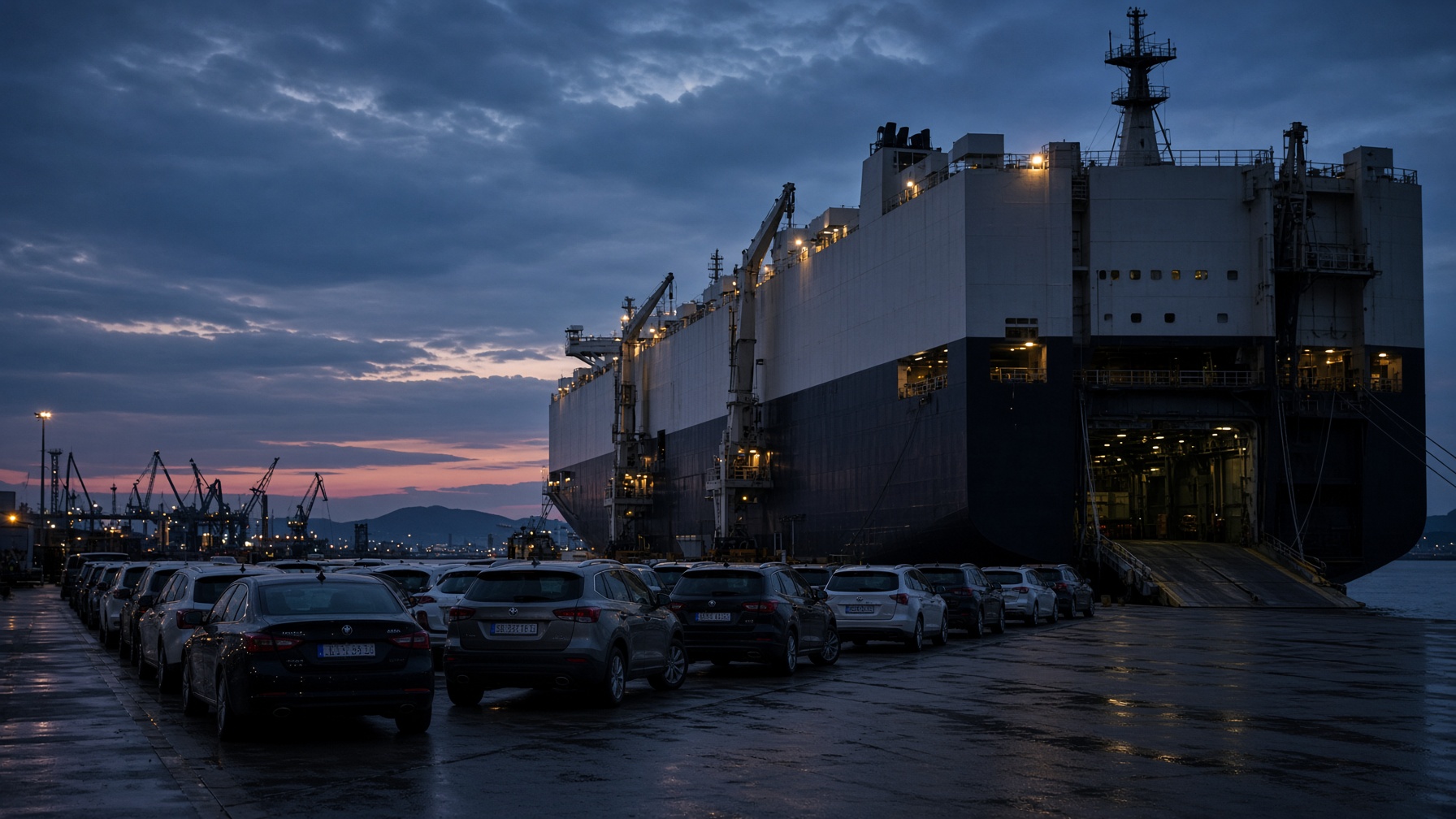
The United States is the first market this collection is built for. American search engines, American titles, American rules. If you are buying from us — or from anyone overseas — the import is a paperwork problem, not a mystery.
Three federal agencies touch a car at the border: U.S. Customs and Border Protection (CBP) clears the shipment, the National Highway Traffic Safety Administration (NHTSA) cares about crash standards, and the Environmental Protection Agency (EPA) cares about emissions. You file declarations with all three. None of them will title the car for you; that is a state DMV job after the car is in the country.
The 25-year rule
A motor vehicle that is at least 25 years old, counted from the month of manufacture, can be imported without meeting Federal Motor Vehicle Safety Standards. NHTSA is explicit: the car is entered on Form HS-7, Box 1. You do not need a Registered Importer, and you do not need to modify bumpers, lights, or airbags to U.S. spec.
Age is not model year. A car badged as a 1999 may have been built in December 1998. We will read the manufacturer plate with you before you send a deposit on any 25-year listing.
EPA also exempts vehicles that are 21 years and older from emissions compliance, using a separate form (3520-1). In practice, a true 25-year car clears both agencies. Do not assume a 22-year-old Skyline is done — NHTSA still wants 25.
Cars newer than 25 years
If the vehicle was originally certified to FMVSS and still has the manufacturer’s certification label at the driver’s door, it is a normal import. Most U.S.-spec Porsches, AMGs, Broncos, and Range Rovers on this site fall in that bucket.
If it was not certified — a Japanese-market Land Cruiser, a European-only model — it cannot be imported permanently unless a NHTSA Registered Importer brings it in and conforms it, and only if NHTSA has found that make/model/year eligible. A bond equal to 150% of declared value is posted, and the work must be finished within 120 days. This is expensive. We will say so on the listing rather than surprise you.
What we send with the car
Bill of sale, title or export certificate, odometer disclosure, and a pre-export inspection. You (or your customs broker) file HS-7 and EPA 3520-1 at the port. We are not a customs broker and we are not a Registered Importer; we are the seller with the documents in order.
This article is a map, not legal advice. Rules change. Read NHTSA’s importing-vehicle pages and CBP’s “Importing a Motor Vehicle” primer before you book a ship.